Ovariectomy vs. Ovariohysterectomy: What’s the Difference?
If you’ve been researching spaying your dog, you’ve probably come across two terms: ovariectomy and ovariohysterectomy. They sound complicated, but the difference is actually pretty straightforward.
Both procedures are forms of spaying, and both prevent your dog from becoming pregnant. The main difference is which reproductive organs are removed.
What Is an Ovariectomy?
An ovariectomy is the removal of the ovaries only.
The ovaries are responsible for producing reproductive hormones and releasing eggs. When the ovaries are removed, your dog can no longer become pregnant and will no longer go through heat cycles.
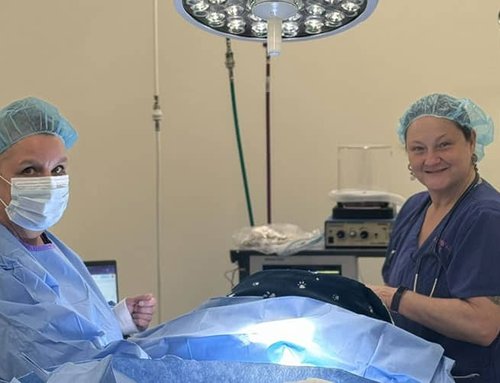
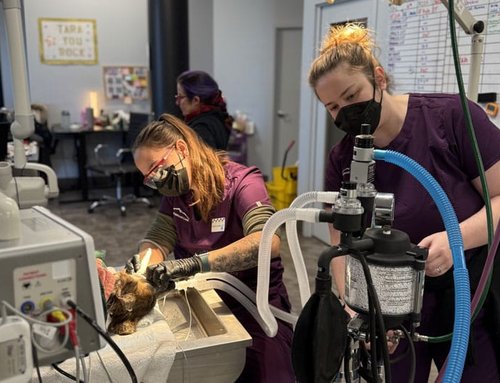
At Summit Veterinary Care, our laparoscopic spay is performed as an ovariectomy. For eligible dogs, we use a minimally invasive laparoscopic approach to remove the ovaries through small abdominal incisions while leaving the uterus in place.
What Is an Ovariohysterectomy?
An ovariohysterectomy involves removing both the ovaries and the uterus.
This is the traditional approach to spaying that many pet owners are familiar with. It is typically performed through a larger abdominal incision than a laparoscopic procedure.
Like an ovariectomy, an ovariohysterectomy prevents pregnancy and eliminates heat cycles.
Is One Better Than the Other?
This is where things can get a little more nuanced.
For a healthy, young dog, removing the ovaries eliminates the source of reproductive hormones and prevents pregnancy. Because the uterus is no longer exposed to those hormones, it generally becomes smaller over time.
Research has found that ovariectomy and ovariohysterectomy can both be effective methods of sterilization, with no clear evidence that routinely removing the uterus provides additional benefits for healthy dogs. However, there are situations where removing the uterus may be medically appropriate.
Your veterinarian can help determine which approach makes sense based on your dog’s age, health, reproductive history, and individual circumstances.
Why Does This Matter for Laparoscopic Spay?
Using a laparoscopic approach allows our veterinary team to remove the ovaries through small incisions rather than performing a traditional open abdominal procedure.
For eligible dogs, this minimally invasive approach may offer benefits such as smaller incisions, less tissue disruption, and a potentially more comfortable recovery.
Our laparoscopic spay is currently available for dogs weighing 25 to 50 pounds. We do not currently perform laparoscopic surgery on dogs under 25 pounds or on cats.
Have Questions About Your Dog’s Spay?
We know that veterinary terminology can feel overwhelming, especially when you’re trying to make the best decision for your pet.
At Summit Veterinary Care, we believe you should understand your options before making decisions about your dog’s care. We’ll explain the procedure, answer your questions, and help you understand what to expect before and after surgery.
If your dog weighs between 25 and 50 pounds and you’re considering a spay, ask our team whether a laparoscopic ovariectomy may be an option.
We’re here to make your pet’s care feel a little less complicated, and a lot more personal.
Share This Story, Choose Your Platform!
About the Author: Summit Veterinary Care